The Start Equal Pledge

Inherited more than you need? Turn the rest into starting capital for others.

An inheritance pledge for heirs and owners. Nobody needs to inherit more than the average person owns – in Germany about €360,000. Of everything above that, you pass on a share of your choice as starting capital for someone who inherits nothing.

This is not charity. It is liberal capitalism taken seriously: let people start equally.

Calculate your shareJoin the founding circle
Photo: Grunderbe raffle in Koblenz, Stiftung Grunderbe

The pledge – for the future

I keep or pass on at most the average wealth per person in my country – in Germany about €360,000. Whatever I inherit, or plan to leave to any one person, above that goes into starting capital for people who inherit nothing – all of it, 38.2 % or a tenth, as I choose.

Calculate yours →

The match – for today

Fund two, we add a third: for the first ten people who fund two basic inheritances of €20,000 through our partner Stiftung Grunderbe, Start Equal’s founder funds a third – whether or not you sign the pledge.

The founding circle

We are looking for the first ten pledgers. You can sign openly, anonymously, or on the condition that the circle fills.

Join the conversation →

“The essence of the liberal position, however, is the denial of all privilege.”
Friedrich August von Hayek
Liberal economist

Why: the inheritance lottery

Today, one of the greatest determinants of success in life is the family we are born into. This birth lottery creates profound starting injustices. It limits human potential, stifles innovation, and undermines the principles of a truly liberal and social market economy.

Liberals have said this for a long time. A market economy rewards talent and effort only if people enter it on comparable terms. Large inheritances are the opposite of that: unearned, and distributed by birth.

We believe the long-term answer is political: a starting capital for every young person, funded from the inheritances of the generation before. Until then, those of us who have more than we need can simply start.

The pledge

The cap: average wealth

The cap is the average net personal wealth per adult in your country of residence, taken once a year from the World Inequality Database and rounded. For Germany this is currently about €360,000. The cap counts per receiving person, over a lifetime, gifts included, from all sources together.

Why the average? Because it is what everyone would have if wealth were shared equally – in Germany about €360,000 per adult. And it is roughly what an average person passes on in a lifetime: around €300–400 billion are given and inherited in Germany every year, by about one million people who die each year. If every inheritance stopped at the average and the rest became starting capital, everyone would start with about the same. It is not a vow of poverty. Should the pledge become policy one day, it would result in starting justice.

As an heir, as an owner – or both

As an heir

Of whatever I receive in gifts and inheritances over my lifetime above the cap, I will pass on my chosen share – 100 %, 38.2 % or 10 % – within 24 months of receiving it.

As an owner

I will arrange my estate so that, of everything any one person would receive from me above the cap, my chosen share – 100 %, 38.2 % or 10 % – becomes starting capital for others. I will talk to my heirs about this and invite them to co-sign.

“

Say not you know another entirely till you have divided an inheritance with him.
Johann Kaspar LavaterJohann Kaspar LavaterSwiss writer and theologian (1741–1801)

Three levels: choose how much you pass on

The threshold is the same for everyone: the average wealth per adult in your country. You decide which share of everything above it you pass on. Each level is a complete pledge – none is a step towards another.

100 %

Fair Share

I keep my fair share and pass on everything above the average.

The full idea: nobody needs to inherit more than the average.

38.2 %

Golden Ratio

I pass on 38.2 % of everything above the average.

The golden section – a balance between what I keep and what I pass on.

10 %

Tithe

I pass on a tenth of everything above the average.

The oldest giving rule there is – a clear, simple commitment.

What would it mean for you?

Choose your country, enter what you have received or expect to receive – or what you will pass on – and pick a level. Everything stays in your browser.

Pledge calculator

Example: an owner with an estate of €3 million and two children has €2.28 million above the cap (€1.14 million per child). At Fair Share each child receives €360,000 and €2.28 million becomes starting capital; at Golden Ratio it is about €871,000, at Tithe €228,000.

Where the money goes

You choose, and you give directly. Start Equal never holds your money.

  • Basic inheritance in your own country. In Germany: Stiftung Grunderbe (see below).
  • Direct cash transfers in the global south, for example through GiveDirectly (from Germany tax-deductible via Effektiv Spenden), because equal opportunity doesn’t stop at borders.
  • A new basic-inheritance pilot in a country that has none. Start Equal helps set it up, using the German blueprint.

How binding is it?

The pledge is a personal, moral commitment, not a contract. You decide whether your name is listed. If you want to make it legally firm, a clause in your will does that; in countries with forced-heirship rules (such as the German Pflichtteil) this works best when your heirs co-sign. Please take your own legal and tax advice.

Start now: fund two, we add a third

A pledge concerns the future. To begin today, Start Equal’s founder Jan Veddeler has set aside money from his own inheritance as a founding match. The match is separate from the pledge: it is open to anyone who gives now, whether or not they sign.
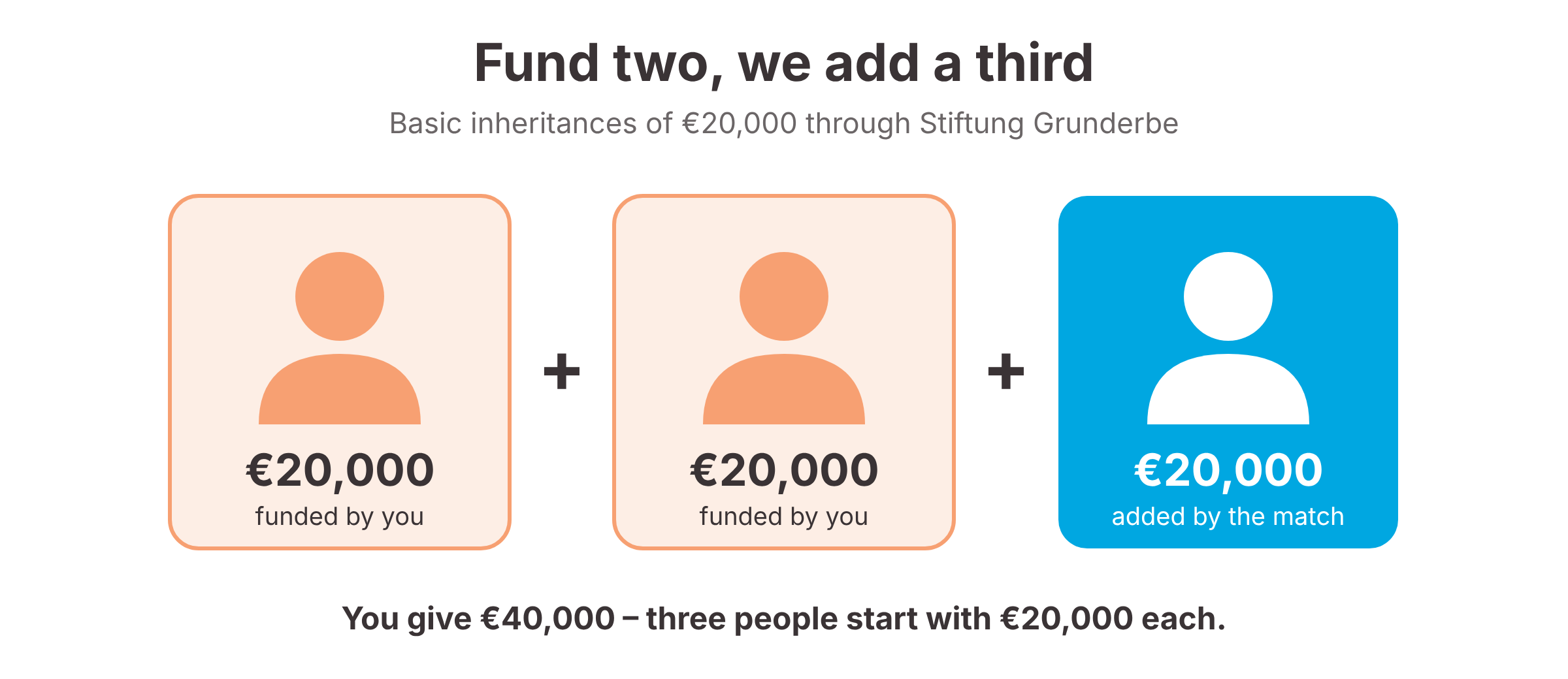
Fund two, we add a third: you fund two basic inheritances of €20,000, the match adds a third – three people start with €20,000 each.

  • 50 cents per euro: for every euro you give to Stiftung Grunderbe, or to a new basic-inheritance pilot that Start Equal helps set up, the match adds 50 cents.
  • In whole units: you fund two basic inheritances of €20,000, the match funds a third.
  • €20,000 per person: the match is limited to one additional basic inheritance per person, so that it reaches ten givers. You are welcome to give more.
  • Straight to the recipient: you pay into a trustee account at Stiftung Grunderbe, and the foundation passes each €20,000 on to a person drawn in its raffle. Legally it is your gift to that person: the foundation never owns the money, so there is no donation receipt. The match is paid the same way.
  • For the first ten: ten givers fund two basic inheritances each, the match adds ten more – thirty people who start with a capital of their own.

Gifts to GiveDirectly count towards your pledge, but are not matched: the match is meant to build something that would not exist without it.

“

You do not take a person who, for years, has been hobbled by chains and liberate him, bring him up to the starting line of a race and then say, ‘You are free to compete with all the others,’ and still justly believe that you have been completely fair.
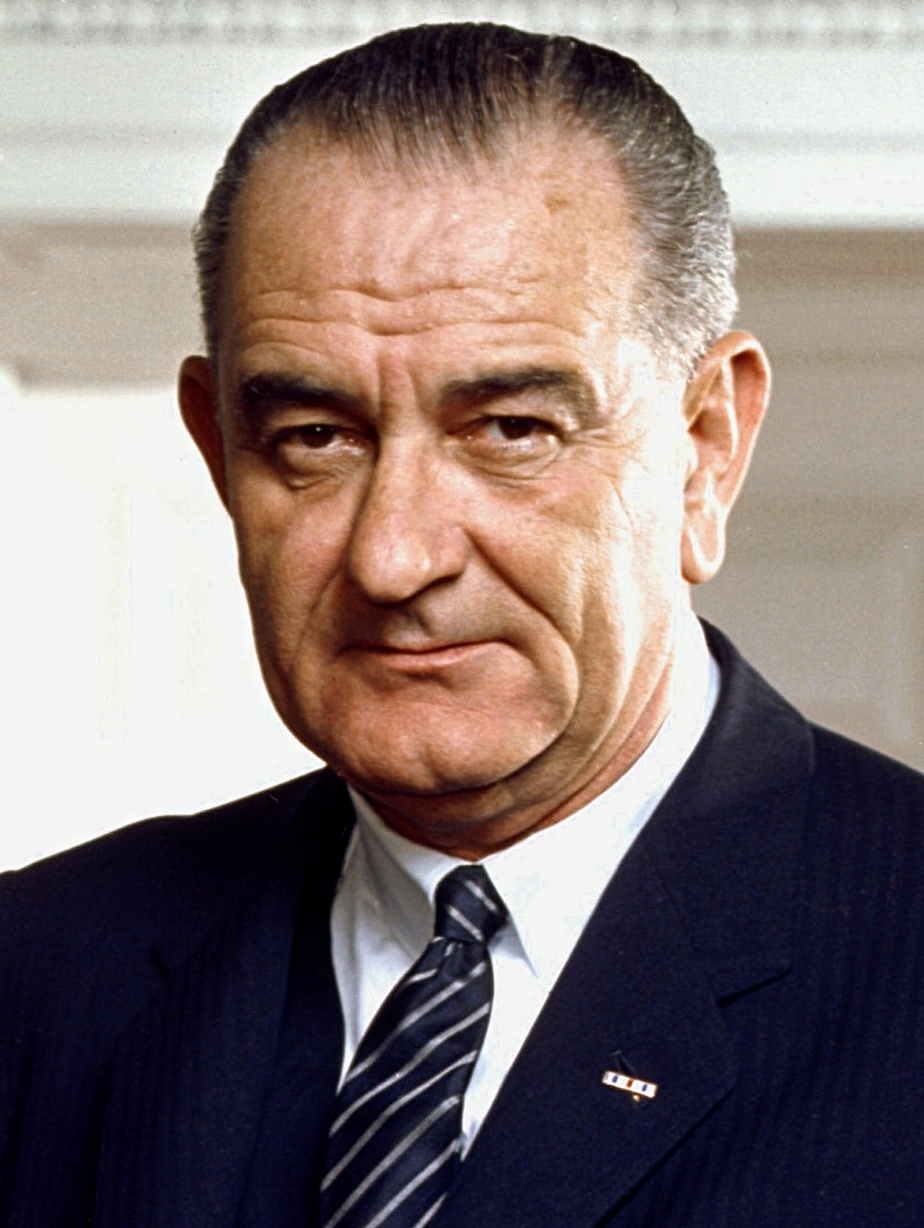
Lyndon B. JohnsonLyndon B. Johnson36th President of the United States, 1965

Our primary implementation partner: Stiftung Grunderbe

The German Stiftung Grunderbe (Foundation for Basic Inheritance) is an established pioneer in the field, founded in 2010 by the entrepreneur Christoph Prüm and family.

  • Track record: four rounds of basic inheritance allocation across 12 German cities, distributing €20,000 to each raffle winner.
  • Who receives it: 30-year-olds in the places drawn each year who have not received a significant inheritance.
  • Reciprocity: recipients who later inherit pay back up to 20 % of that inheritance into the foundation’s fund – at most the €20,000 they received.
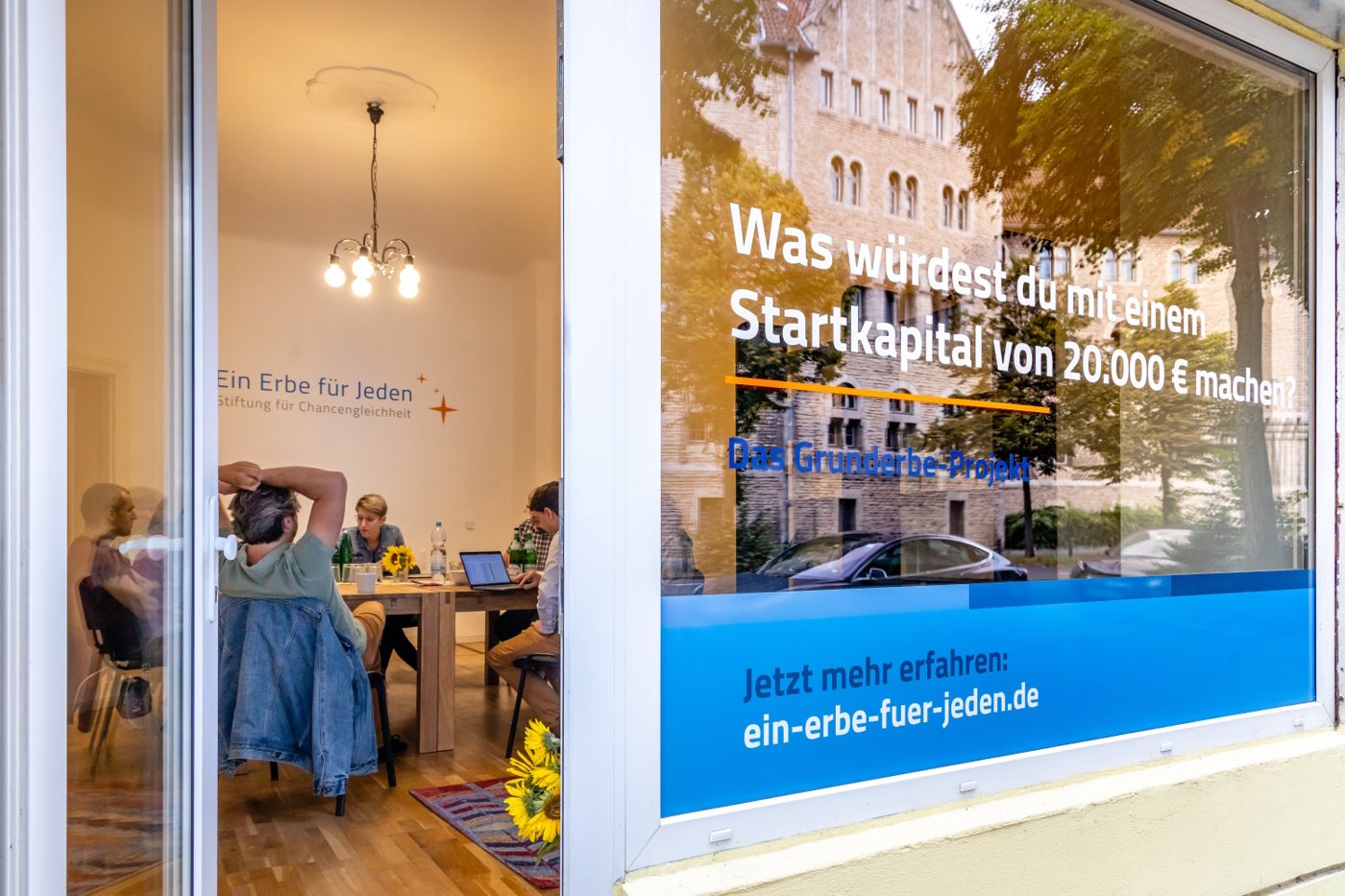
Stiftung Grunderbe in Berlin: “What would you do with a starting capital of €20,000?” Photo: Stiftung Grunderbe

What would you do with a basic inheritance of €20,000?

A home of my own
31 %
Invest it
22 %
Start a business
14 %
Pay for education or training
11 %
Give it away
9 %

Survey by Stiftung Grunderbe among young adults (since 2015), most frequent answers. Source: ein-erbe-fuer-jeden.de

More information: grunderbe.de

Outside Germany? If you would like your capital to serve your own city, region or country, Start Equal is happy to help you set up a similar basic-inheritance programme there.
“The hereditary inequality of opportunity is the most essential institutional structural element through which feudalism lives on in the market economy society.”
Alexander Rüstow
ordo-liberal founding father of the social market economy

The founding circle

We are looking for the first ten people who sign. Founding pledgers help shape the final wording and decide together when the pledge goes public.

  • Open or anonymous: your choice, now and later.
  • “I’m in if others are”: you may sign on the condition that the circle of ten fills.
  • No amounts published: the pledge is a rule, not a number. Nobody needs to disclose what they own or expect.

To join or to talk it through, fill the form below or reach out to jan@startequal.org.

This is not yet a signature – it starts a conversation. Nothing is published without your consent.

Prefer to read offline? Download the pledge as PDF (9 pages).

Why I am doing this

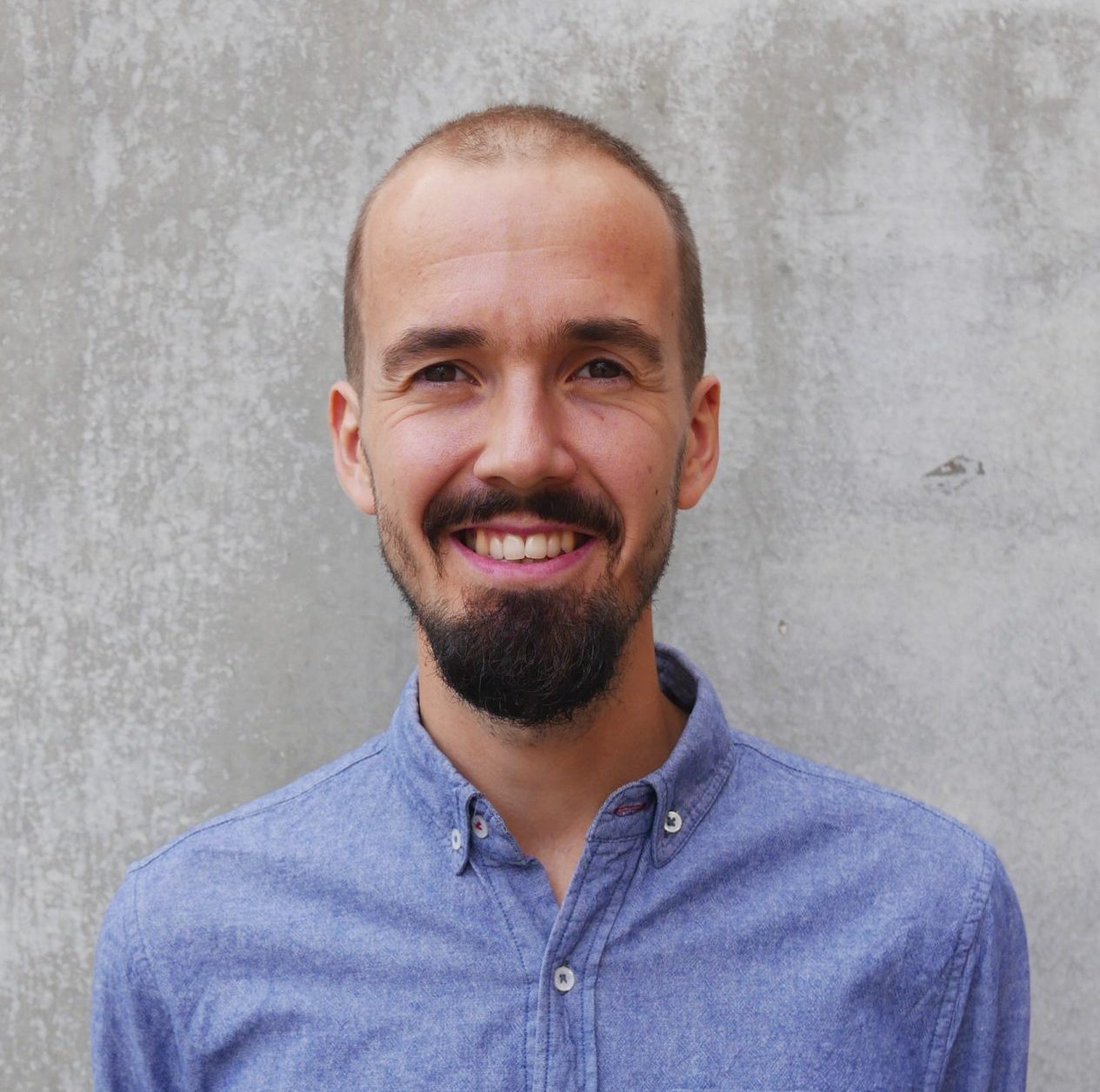
Jan Veddeler, founder of Start EqualI was born and raised into a wealthy family in Northern Germany. My father took over a small family business from my grandfather and extended it into several successful companies. Despite, or probably because of, this background I want to abolish inherited privilege and work towards a world of more equal opportunities. For the inheritance I have already received, I decided a long time ago not to regard it as my own property. I keep it separate from my self-earned funds and hold it as a trustee, if you like. The founding match is that money.

My upbringing gave me something more valuable than money: confidence. The basic trust that something will cushion me when I fall. That confidence is what let me take risks and choose meaningful work. Everyone wants this for their children, and that is why most people hold on to our unjust inheritance system. The idea of universal starting capital is to spread this confidence to all of our children, for a fair and equal start in life. A life in which everyone can attempt to fly without being afraid to fall too far.

Jan Veddeler, founder of Start Equal. PhD candidate in Applied Economics at the University of Antwerp, researching social-liberal inheritance reform and universal basic capital. Co-founder of Startup Lions (Turkana, Kenya), IT training and digital job creation. Open-source ERP consultant at humanilog.org.

Questions you may have

Why no conditions on how the money is used – and why a raffle?

Because people know best what they need for a fair start – and the evidence backs this up:

2.5×
Every $1,000 sent generated about $2,500 in the local economy, with prices up only 0.1 % on average.
Kenya, randomised study · Egger et al. 2022
> ⅓
of the money was saved. People receiving €1,200 a month for three years did not withdraw from work or cut their hours.
Germany · DIW Pilotprojekt Grundeinkommen, 2025
28 → 40 %
of recipients in full-time work after one year (comparison group: 32 → 37 %).
Stockton, USA · SEED, $500 a month, 2019–2020
2 of 44
estimates found more spending on alcohol and tobacco – both small, non-experimental. On average, such spending falls.
19 studies worldwide · Evans & Popova 2017

Sources: GiveDirectly research (Egger et al. 2022) · DIW 2025 · SEED Stockton · Evans & Popova (2017), Economic Development and Cultural Change 65(2).

Most of these programmes are called basic income, but they are time-limited: a fixed sum over one to three years, not an income for life. In effect they test what we propose – a one-off starting capital, paid out in instalments. That makes them some of the best evidence there is for a basic inheritance.

Still, a basic inheritance is not pocket money. At Stiftung Grunderbe, recipients confirm that they have not received a significant inheritance, invest the €20,000 – in education, a business, a home or savings – and hold the investment for three years. They give a yearly interview on what it changed, and they pay it back in whole or in part if they inherit later. Asked what they would do with a basic inheritance, young people in a survey by the foundation named a home of their own (31 %), investing (22 %), starting a business (14 %) and education (11 %).

Why a raffle? As long as there is not enough money for everyone, drawing lots among all 30-year-olds of a place is the fairest way to choose: no application essays, no committee deciding who deserves it, no stigma. And it creates a fair comparison group, so the effects can actually be measured.

Could it be more targeted? In principle, yes: basic inheritances and baby bonds exist in several countries (what they teach us), some with tighter rules on how the money may be used. That is compatible with the idea, but more paternalistic, less liberal and more bureaucratic – and the evidence above suggests it is rarely necessary. In Germany we work with Stiftung Grunderbe and its rules.

Does this mean abolishing inheritance?

No. Up to the average, passing on wealth within the family stays exactly as it is – the pledge only concerns what lies above it. The same holds for the policy idea behind it: inheritances up to a generous allowance remain private. Family businesses can still be handed over above that: the heir takes over and pays the tax back over many years out of the company’s profits, like a loan from the state; or a public fund holds the shares for a while as a silent partner – a temporary trustee – until the heir buys them back or they are sold. More: Family businesses and inheritance taxes and Property rights and the freedom to bequest.

Average wealth and what people pass on – why are they not exactly the same?

Older people hold more wealth than younger adults, and the generations dying now are richer than average – this pushes the amount passed on up. Transfers between spouses are counted too, and fewer children are born than people die. If wealth were spread evenly across ages and the population were stable, both numbers would be the same. In Germany they are close: about €360,000 average wealth per adult, about €300,000–400,000 passed on per person over a lifetime.

Is this communism?

No, it is capitalism taken seriously. It ensures fair competition by reducing inherited privilege, the last vestige of feudalism. Success should depend on talent and effort, not birth.

Left-wing or conservative?

Neither, or both. Start Equal is social-liberal. Liberty and equality of opportunity are inseparable; you cannot be free in a rigged race.

What about my children?

They still inherit up to the average wealth of their country, more than most people ever receive.

Why not simply pay inheritance tax?

You can do both. Taxes go into general budgets. The pledge turns inherited wealth directly into starting capital for individuals, and builds the evidence for a public scheme funded the same way.

Why not just give to charity?

Classic charity relieves need. Starting capital changes where people start: it funds education, a business, a home. It is ownership, not aid.

Won’t starting capital make people lazy?

Where it has been tried, young people mostly invest it. In South Korea’s Didim seed accounts, young adults used their withdrawals mainly for tuition, housing and vocational qualifications (more on real-world schemes). The match helps build more of that evidence.

What about taxes on my gift?

This depends on your country. In Germany, a basic inheritance through Stiftung Grunderbe is a private gift from you to the recipient, not a donation, so it is not tax-deductible for you. €20,000 is the tax-free allowance for gifts to a person who is not a relative, so the recipient pays no gift tax. Donations to GiveDirectly made from Germany via Effektiv Spenden are tax-deductible; elsewhere it depends on how you give. Please ask your own adviser.

Is the idea unrealistic?

No, forms of it already exist or existed as Child Development Accounts and baby bonds, for example in the UK, Canada, the USA, Singapore, South Korea, Kazakhstan and Hungary. What these real-world schemes teach us: Basic Inheritance Light.

About Start Equal

Start Equal is a social-liberal initiative for a world in which everyone has an equal and empowered start in life. We work on three things: funding and piloting starting capital together with partners; connecting the people and organisations working on starting capital and direct cash transfers worldwide; and making the case for public reform, so that the inheritances of one generation fund a starting capital for everyone in the next.

Partners: Stiftung Grunderbe (implementation), Netzwerk Steuergerechtigkeit / Tax Justice Network Germany. More: startequal.org/framework

“Economists and communists, you who offer me freedom without equality there, equality without freedom here, I feel deprived of my rights and reject your presents.”
François Huet
19th-century Belgian philosopher

Legal note: Start Equal is a project initiated by Jan-Marten Veddeler, Berlin, Germany. The pledge is a non-binding personal commitment. Start Equal does not receive or hold pledged funds. Nothing on this page is legal or tax advice.