
Our own analysis and policy proposals for a more liberal and just inheritance system – from the history of the idea of a universal basic inheritance to current reform debates. Browse by topic or scroll through all articles below.
 babybond
Basic Inheritance Light: What real-world baby bonds teach us about a universal basic inheritance
Since the 2000s, many countries have introduced Child Development Accounts and baby bonds. A comparison shows: they prove universal starting capital is feasible – but they are only a 'basic inheritance light'.
Read More » handicap
Status and Inheritance: Hanno Sauer’s “Class” analysis.
In the book “Class. The origin of top and bottom.” the author Hanno Sauer makes the claim that that economic redistribution—no matter the form: whether a basic inheritance, UBI, progressive taxes, etc. —actually intensifies the problem of status hierarchies, because
Read More » liberty
Simone Weil’s (1943) “right to property” against uprootedness
Simone Weil (1909–1943), was a philosopher who died working for the French resistance movement against Nazi-Germany. She is noted for her intense patriotism, Jewish heritage, and Christian spirituality, possessing a “great soul and brilliant mind” (in the words of T.S.
Read More » ordo-liberalism
Ordo-liberalism, starting justice and a universal basic inheritance: Alexander Rüstow
Alexander Rüstow, a towering figure in the German Ordoliberal school of thought, developed his ideas while navigating a tumultuous political period. As an opponent of the Nazi regime, he fled Germany in 1933 and spent his exile years as a
Read More » erzberger
Matthias Erzberger’s ambitious inheritance reform of 1919
Matthias Erzberger, a pivotal figure in early 20th-century German politics, stands out among proponents of inheritance reform due to his background as an active politician rather than an academic, and for having actually implemented his major tax reform proposals, at
Read More » 100% inheritance tax
The ‘Abolition of inheritance’: Theodor Oelenheinz
In the times of socialist revolutions in post-war Germany, the lawyer Theodor Oelenheinz, son of a bank director from Karlsruhe, grandson of the former finance minister of Baden (Germany) Karl Georg Hoffmann[1], and brother of the artist and architect Leopold
Read More » disability
Disability and Opportunity: Can Inheritance Bridge the Gap?
One of the underlying assumptions in this text has been that financial privilege correlates with other privileges (see for instance our article on Biological Feudalism). The idea, put simply, is that if your parents are wealthy, you are likely to be
Read More » wealth tax
Second-best at best: Why a wealth tax is no alternative to inheritance tax, nor a very good complement
In the discussion of inheritance taxes, wealth taxes feature prominently, sometimes as a useful complement, but often as an alternative. Where inheritance and gift taxes are one-off transfer taxes, wealth taxes usually occur annually. Wealth taxes aim at the total
Read More » constitutional rights
Inheritance Rights: A Constitutional Perspective
Sometimes, if all other arguments fail, defenders of inheritance will point towards the constitution and argue that its simply legally not possible to substantially or fully tax/abolish inheritance. Indeed many though by far not all constitutions explicitly acknowledge the right
Read More » biological feudalism
Biologocial Feudalism
Biological Feudalism Privilege can not only be passed on through economic or sociocultural channels, but also much more directly and fundamentally by biological means. The development of personal abilities and potential is influenced by a complex interplay of biological factors.
Read More » Inheritance as equaliser
Inheritance as an equaliser?
Inheritance is sometimes touted as a mechanism that can reduce inequality by spreading wealth more evenly across society. This can technically be true, as there are a number of statistical mechanics at play. It doesn’t have to be like that,
Read More » 200% inheritance tax
Natural Differences and the Handicap Principle: A case for 200% inheritance tax
“I returned, and saw under the sun, that the race is not to the swift, nor the battle to the strong, neither yet bread to the wise, nor yet riches to men of understanding… but time and chance happeneth to
Read More »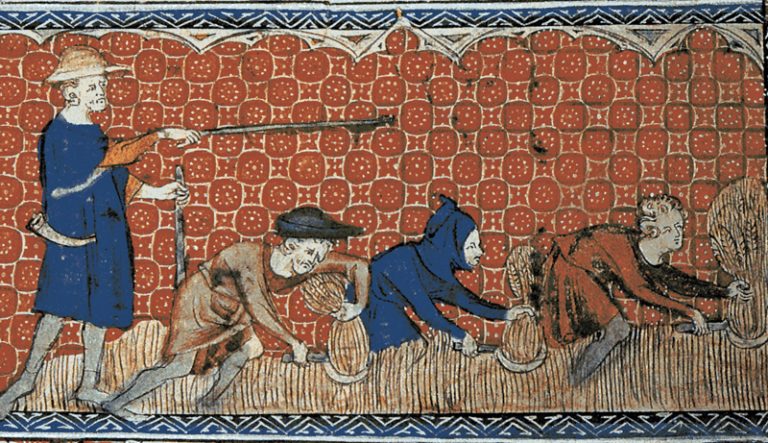 feudalism
Feudalism: A thing of the past?
A short review of the history of feudalism in the Middle Ages is insightful for the inheritance debate in two very different ways. On the one hand, we can see historical feudalism as a prime example of inherited privilege, which
Read More » 110%
110% inheritance tax: Compensating for privilege
As we have seen in previous articles on this blog, If this is the case, the question is not, do we need very high inheritance taxes, but rather, how high should they be? 100%? If we acknowledge the fact laid
Read More » social mobility
The “Three generation” myth: Does inequality regulate itself over time?
From shirtsleeves to shirtsleeves in three generations.Wealth never survives three generations.The father buys, the son builds, the grandchild sells. The above are all variations of a persistent and widespread belief in what is called the ‘three generation rule’ or ‘third
Read More » equality of opportunity
Equality of Opportunity and Equality of Outcome: It’s just not the same thing!
The key concept of social-liberalism is equality of opportunity. It rests on the insight that true liberty can only be achieved through fairness: How can I be called free if I start off my life with a tremendous disadvantage compared
Read More » constitutional rights
Against Majority Opinion? Equality of Opportunity as a Constitutional Right
Can we defend inheritance taxes against majority opinion? This article claims we can, by relying on constitutional rights protecting human dignity, liberty and equality. Abolishing inheritance due to its adverse effect on equality of opportunity may thus be the next
Read More » cultural capital
Inherited Privilege: Socio-Cultural Feudalism
Despite a formal abolishment of political feudalism through the democratic revolutions of the last centuries, a form of economic feudalism has survived up to the current day. However, privilege is not only inherited economically, but to a large extent also socio-culturally.
Read More » bequest motive
Inheritance tax and incentives: People will still work
Critics of inheritance taxes often argue that taxing inheritance and gifts would reduce the incentive to work and save, with adverse effects on the economy. If people would not be able to pass on their wealth to their children and
Read More » family business
Family businesses and inheritance taxes: debunking a myth
One of the most central arguments against inheritance tax is that it will be detrimental to the SME and family business sector (considered to be the stable backbone of many economies) by rendering family-internal company succession impossible. Heirs don’t inherit
Read More » double taxation
There is no double taxation with inheritance taxes
Opponents of inheritance taxes often claim that the inheritance that is to be taxed had already been taxed before (e.g. through corporate or personal income taxes). As double taxation is often considered something tax regimes wants to avoid (note: in
Read More » feasability
Tax Avoidance and Tax Evasion: A killer argument?
A popular and influential strand of arguments against inheritance taxes (and other wealth-related taxes such as capital income tax) doesn’t bother to question its desirability per se, but rather its feasibility. One of the two common concerns is tax evasion,
Read More »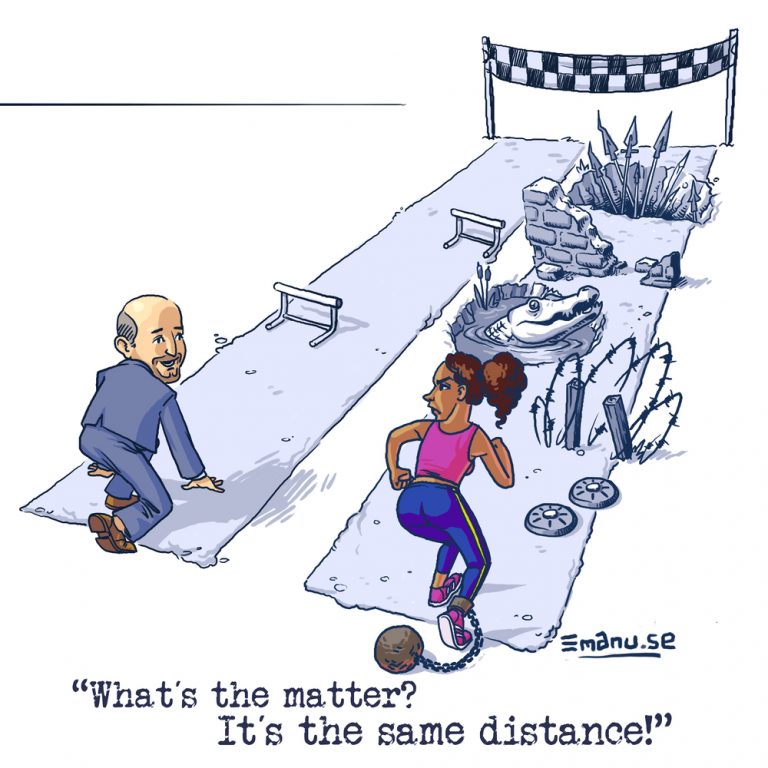 free will
Meritocracy, Handicap and Free Will
In any debate about taxation, the concept of meritocracy is central: the distribution of income and power according to merit, that is, performance and achievements. It is also a central liberal concept and thus of importance to this text which
Read More » gift tax
Gifts and Inheritance: Any difference?
While it may appear straightforward to tax inheritance income given the perspective that emphasises the receiving side (unearned income) and prioritises negative effects on the living (inequality of opportunity) over the rights of the dead, taxing gifts is slightly more
Read More » death
Property rights and the freedom to bequest
The question of whether a deceased person does still enjoy legal rights, and if so: which, is certainly a very interesting one in the inheritance tax debate. This paper is largely arguing from the perspective that a deceased person loses
Read More » charity
Everything is better than donating to the government? Well, you don’t have to!
For many people, one of the key arguments against inheritance taxes lies in its recipient: “the state”, or “the government”. This has been put nicely by one Quora user: “[…] it is obviously preferable to do almost anything with money
Read More »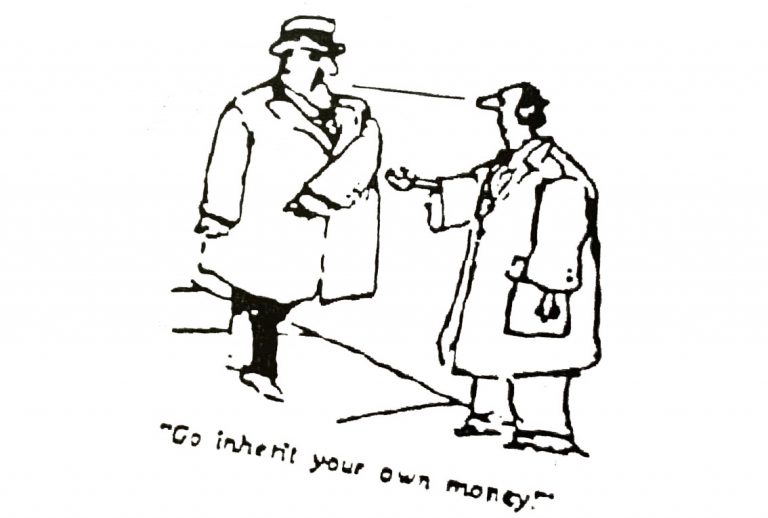 collectivism
All families are created equal? Individualism vs. Feudalism
In debates about inheritance, you can discover that disagreement about inheritance matters often boils down to disagreements about the ideological underpinnings. With this, I don’t refer to the potentially clear case of “left” vs. “right”, but to the slightly subtler
Read More » questions
Questions to tackle
Here are some of the questions we would like to reflect upon, research, analyse and ultimately come up with a set of policy proposals aiming for a more liberal and just approach to inheritance than we have right now. Can
Read More »